You know that feeling when you spot something so magnificent, your breath just… stops?
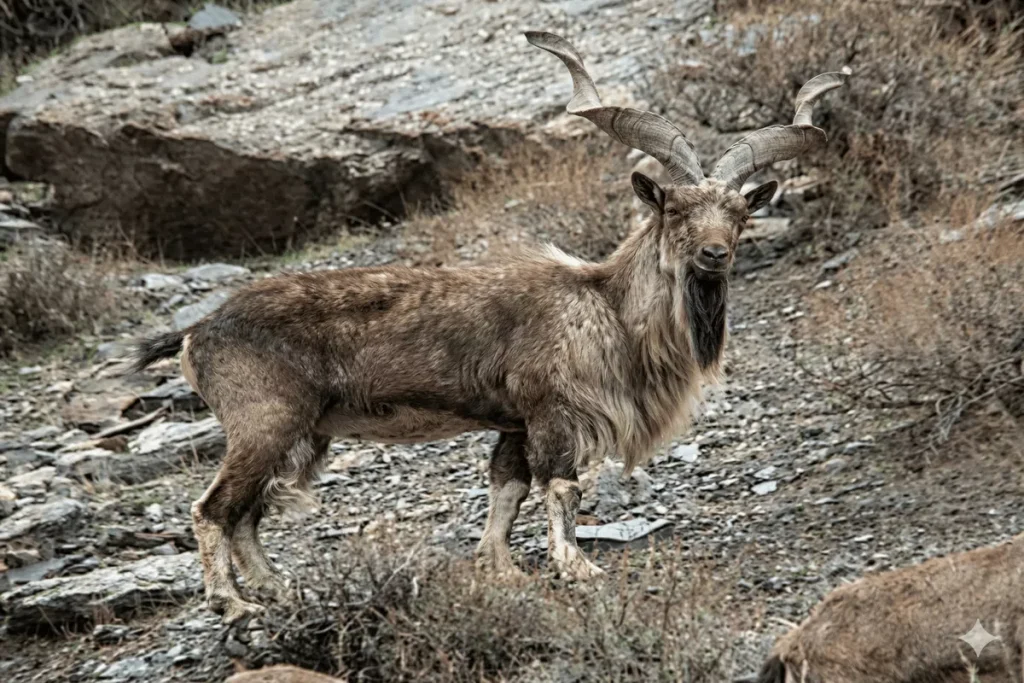
That’s what happens the first time you see a mature Markhor bull through your binoculars. Those massive spiral horns catching the mountain light. The sheer presence of an animal that’s outlived predators, avalanches, and the harshest winters on Earth.
I’m not going to sugarcoat this: hunting Markhor in Pakistan isn’t like booking a whitetail hunt in Texas. It’s harder. More expensive. And absolutely worth every penny if you do it right.
But here’s what most hunting outfitters won’t tell you upfront: not all Markhor regions are created equal.
Some areas are crawling with trophy-class bulls. Others? You’ll be glassing empty ridges while your guide makes excuses about “bad weather” and “the animals moved higher.”
I’ve spent years tracking down the real story behind Pakistan’s Markhor hunting grounds. Today, I’m sharing exactly where the animals actually are, what you’ll face in each region, and which spots give you the best shot at the hunt of a lifetime.
Let’s get into it.
Why Pakistan Is THE Markhor Destination?
Before we dive into specific regions, you need to understand one thing: Pakistan isn’t just a place to hunt Markhor.
It’s the only place that matters.
Sure, the species technically exists in Afghanistan, Tajikistan, and a few other countries. But Pakistan holds the largest, healthiest, and most genetically diverse Markhor populations on the planet. We’re talking over 5,000 animals across multiple subspecies.
And here’s the kicker: the conservation model actually works.
Unlike other trophy hunting programs that feel sketchy at best, Pakistan’s community-based system has brought the Markhor back from near extinction. In the 1980s, we were looking at fewer than 200 animals in places like Torghar. Today? Over 3,000 in that region alone.
When you pay $150,000 to $200,000 for a permit (yeah, it’s serious money), 80% goes directly to local villages. These communities now protect Markhor like their retirement accounts depend on it. Because they literally do.
The result? Animals are thriving. Trophy quality is exceptional. And you’re funding real conservation, not just paying lip service to it.
Now let’s talk about where to actually hunt these magnificent animals.
The Big Three: Pakistan’s Premier Markhor Hunting Regions
1. Chitral District: The Gold Standard
If you only hunt Markhor once in your life, make it Chitral.
This northern district in Khyber Pakhtunkhwa is hands-down the most important Markhor hunting region in the world. The numbers don’t lie: over 2,200 Kashmir Markhor roam the valleys around Chitral Gol National Park and the surrounding conservancies.
What makes Chitral special:
The animals here are visible. Unlike other areas where you’re glassing for days hoping to spot movement, Chitral’s Markhor have grown comfortable enough to graze within sight of roads. There’s literally a spot called “the evening parade” where bulls descend to drink at the river.
I’m not saying it’s easy. But your odds of seeing multiple trophy-class males? Sky-high.
The Tooshi-Shasha Conservancy is particularly famous. Located along the Garam Chashma road, this area benefits from spillover animals from the national park. The accessibility is a double-edged sword though—it’s easier for you, but also sees more hunting pressure.
For a more wilderness experience, look at the Gehrait-Goleen Conservancy. This massive tract connects Chitral valley to the Hindu Kush peaks. The Markhor here are migratory, using high-altitude summer pastures before descending to oak forests in winter. The bulls tend to be bigger, older, and more impressive.
The reality check:
Success rates are high, but so is demand. These permits get auctioned months in advance. You’re competing against wealthy international hunters who’ve been waiting years for their shot.
Also, the population density has created its own problems. Chitral Gol National Park is actually over carrying capacity in some areas. That sounds like a good problem until you realize it means increased competition for forage and lower kid survival in bad winters.
Still, if you want the best chance at a world-class Kashmir Markhor, Chitral is your spot.
2. Torghar Hills: Where Straight-Horned Legends Are Made
Drive southwest to Balochistan’s Qilla Saifullah district, and you’ll enter a completely different world.
Torghar—the “Black Mountain”—looks like Mars had a baby with Afghanistan. Arid. Harsh. Unforgiving. And home to the single largest population of Suleiman Markhor on Earth.
This is where the conservation miracle really happened.
In the early 1980s, fewer than 200 Markhor survived here. Automatic weapons from the Afghan war had flooded the region, and poaching was out of control. The local Jogazai tribe was watching their heritage disappear.
Then they did something radical: they banned hunting completely, hired their own game guards, and created the Society for Torghar Environmental Protection (STEP).
Today? Over 3,000 Markhor roam these mountains.
What makes Torghar unique:
First, you’re hunting a different subspecies. Suleiman Markhor have tighter, straighter spiral horns compared to the flaring horns of Kashmir Markhor. They’re also slightly smaller-bodied, adapted to the extreme desert conditions.
Second, the area is vast—about 1,000 square kilometers of rugged terrain. This isn’t a contained hunt. You’ll be hiking steep ridges, glassing distant cliff faces, and probably questioning your fitness level.
Third, it’s entirely self-funded through trophy permits. No government bureaucracy, no international NGO overhead. Just local tribesmen protecting their asset. It’s capitalism meeting conservation in the best possible way.
What to expect:
The Torghar hunts are physically demanding. You’re at altitude, in dry conditions, covering serious ground. But the trophy quality is exceptional. The conservation area has been managed long enough that age structure is ideal—plenty of mature bulls in the 8-10 year range.
The Takatu National Park, northeast of Quetta, offers similar hunting opportunities with a slightly different landscape. The population there has rebounded to 1,400-2,000 animals after being completely “shot out” decades ago.
3. Gilgit-Baltistan: The Adventurer’s Choice
If you want the most dramatic scenery on Earth as your hunting backdrop, Gilgit-Baltistan is calling your name.
This is Karakoram country. K2 territory. Peaks so high they create their own weather patterns, and valleys so deep you’ll wonder if the sun ever reaches the bottom.
The Astor Markhor here are fragmented into “island” populations separated by glaciers and ridges. But in the right conservancies, densities are excellent.
Top hunting areas:
Khanbari Valley in Diamer district shows the highest observational density—1.13 animals per survey unit. The remoteness combined with strong tribal governance has created a sanctuary effect. Animals here are less habituated to humans, more skittish, and often harder to approach.
SKB Conservancy (Skoyo-Karabathang-Basingo) in Roundu district covers about 1,598 square kilometers of incredibly steep terrain. The cliffs here naturally limit livestock grazing, so Markhor aren’t competing for forage. It acts as a population reservoir with animals moving between valleys.
Tangir Valley also shows strong numbers (0.91 density ratio) though timber extraction is degrading winter habitat in some areas.
The Gilgit-Baltistan trade-off:
You’re hunting in one of the most geopolitically sensitive and logistically challenging regions in Asia. The Karakoram Highway cuts through migration corridors. Some areas require special permits beyond the hunting license. And weather can shut down entire valleys with zero notice.
But if you want a true mountain hunting experience—the kind where you’re genuinely in wild country, not a managed game ranch—GB delivers.
The Regions That Didn’t Make the Cut (And Why)
Let me save you some time and money.
Southern Tribal Districts (Former FATA): The Kabul Markhor in Kurram and Orakzai districts are barely hanging on. Decades of conflict have made these areas data-deficient at best, dangerous at worst. Some animals survive in literal no-man’s land along the Afghan border. Not worth the risk.
Sheikh Buddin National Park: The Markhor here are extinct. Gone. Local extinction confirmed in 2011 surveys. If an outfitter tries to sell you a hunt here, run.
Azad Jammu and Kashmir: The Pir Panjal Markhor in places like Neelum and Qazi Nag are theoretically huntable. But heavy militarization along the Line of Control makes access nearly impossible for civilian hunters. Plus, India’s border fence has severed migration routes, creating isolated populations with questionable long-term viability.
How to Actually Book Your Hunt (The Smart Way)
Pakistan only issues 12 Markhor permits annually through CITES.
These get auctioned at international conventions like Safari Club International. You’re bidding against oil tycoons and hedge fund managers. It’s not a casual purchase.
My recommendation:
Work with a Pakistan-based outfitter who has established relationships with specific conservancies. They can guide you to areas matching your physical abilities, budget, and trophy priorities.
Visit in winter (November to March) when animals descend to lower elevations. Summer hunts are possible but significantly harder—Markhor are scattered across high alpine zones.
And please, get in serious shape before you go. These hunts aren’t technically difficult (you’re not rock climbing), but the altitude and terrain will humble you fast if you’re not prepared.
The Bottom Line
Pakistan’s top Markhor regions—Chitral, Torghar, and Gilgit-Baltistan—offer the most extraordinary mountain hunting on Earth.
Is it expensive? Absolutely.
Is it physically demanding? You bet.
Is it worth it?
If you’re reading this far, you already know the answer.
The Markhor represents everything we claim to value as hunters: conservation through sustainable use, community empowerment, and respect for truly wild places. When you harvest one of these animals, you’re not just collecting a trophy. You’re funding the protection of an entire ecosystem and supporting communities who’ve chosen conservation over exploitation.
That’s not just hunting.
That’s legacy.
Now go book that hunt. The mountains are waiting.

Tahir is a renowned outdoor adventure specialist and wildlife tourism consultant with over 15 years of experience exploring Pakistan’s diverse hunting and fishing destinations. Based in Islamabad, he has guided expeditions across the Northern Areas, from the trout-rich streams of Gilgit-Baltistan to the high-altitude ibex hunting grounds of the Karakoram range.