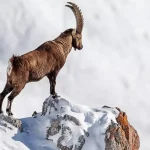
The first time I saw a Sindh ibex, I couldn’t believe what I was looking at.
There it stood on the orange rocks of Kirthar National Park. It looked like something from a fairy tale. Its huge curved horns swept backward like swords. Its body glowed silver-white in the sun. And it watched me calmly, like it owned the place.
The locals call it “Sarah.” The name sounds like a whisper.
And that’s what this animal feels like. A beautiful secret hiding in the mountains.
What Is a Sindh Ibex?
Let’s start with the basics.
The Sindh ibex is a type of wild goat. Scientists call it Capra aegagrus blythi. It lives only in southern Pakistan, mainly in the provinces of Sindh and Balochistan.
A British scientist named Edward Blyth first wrote about it in 1841.
But here’s what the textbooks won’t tell you. Seeing a Sindh ibex in real life is amazing. These animals live on cliffs that would scare most mountain goats. They climb straight up rock walls like it’s easy. They survive in hot deserts where water is hard to find.
The Sindh ibex doesn’t just live in these mountains. It rules them.
What Is the Scientific Name and Classification of Sindh Ibex?
The scientific name is Capra aegagrus blythi. Let me break that down.
Capra is the genus. It includes all wild goats and ibex species. Aegagrus comes from Greek. It means “wild goat.” Blythi honors Edward Blyth, the scientist who first described this subspecies.
Here’s how scientists classify the Sindh ibex:
- Kingdom: Animalia (all animals)
- Phylum: Chordata (animals with backbones)
- Class: Mammalia (mammals)
- Order: Artiodactyla (even-toed hoofed animals)
- Family: Bovidae (cattle, goats, sheep, and antelopes)
- Genus: Capra (wild goats and ibex)
- Species: C. aegagrus (wild goat)
- Subspecies: C. a. blythi (Sindh ibex)
This classification puts it in the same family as domestic goats. But don’t be fooled. The Sindh ibex is 100% wild.
What Is the Local Name for Sindh Ibex?
In the Sindhi and Urdu languages, people call this animal “Sarah.” You say it like “sah-rah.” In Balochi, they say “Sareh.”
These names mean something special to local people.
For hundreds of years, families in Sindh have lived near these animals. They’ve watched them jump across impossible cliffs. They’ve told stories about them. The government of Sindh even made the Sindh ibex the official “Animal of Sindh.”
The name probably comes from ancient Central Asian languages. Over time, people adapted it to fit local languages.
When a hunter talks about tracking Sarah through the mountains, he’s not just hunting. He’s part of a tradition that goes back centuries.
These local names show something important. The Sindh ibex isn’t just wildlife. It’s part of the culture and identity of southern Pakistan.
What Are the Physical Characteristics of Sindh Ibex?
Let me paint you a picture of what these animals look like.
How Big Are Sindh Ibex?
Sindh ibex have thick, strong bodies with powerful legs and wide hooves.
Adult males stand about 30-37 inches tall at the shoulder. That’s roughly the height of a large dog. They weigh between 100-200 pounds. Females are smaller, weighing 65-110 pounds.
Their bodies are built like small tanks. All muscle. They even have tough, callused spots on their chests. These protect them when they lie down on rocky ground.
Why are they built this way? Because they spend their whole lives on steep cliffs.
Why Do Sindh Ibex Have Such Impressive Horns?
This is the best part.
Adult male Sindh ibex have massive curved horns. They can reach over 40 inches long. The longest ever measured was 52 inches. That’s taller than most six-year-old kids.
These horns curve upward and backward in a beautiful arc. They look like scimitars (curved swords). The front of each horn has a ridge, but it’s usually smooth or slightly irregular.
Why do they need such big horns?
Nature doesn’t waste energy. These horns serve several purposes:
Fighting: Males use them during mating season. They stand on their back legs and crash their horns together. The sound echoes across the mountains like thunder.
Dominance displays: Big horns show other males who’s boss. They help establish hierarchy without always needing to fight.
Mate attraction: Females prefer males with bigger, more impressive horns. These horns show the male is healthy and strong.
The biggest horns belong to the healthiest males. That’s why hunters prize them so highly.
Female Sindh ibex have much smaller horns. They only grow to about 15 inches. This huge difference between males and females is called sexual dimorphism.
What Color Is a Sindh Ibex?
This is where things get really cool.
Adult male Sindh ibex look almost magical. Their bodies turn silver-white. Their chests, throats, and faces are dark grey or sooty black. A bold black stripe runs from their shoulders down to their chest.
As males get older, they get whiter. Very old males look like they’re covered in snow.
But this dramatic look changes with the seasons:
Summer coat: Short and reddish-brown. This helps them stay cool in the desert heat.
Winter coat: Longer, thicker fur that’s more grey-brown. This provides insulation when temperatures drop.
Females and young males look different. They’re yellowish-brown to reddish-grey. They have a dark brown stripe running down their backs. This coloring helps them blend in with the tan rocks. It’s perfect camouflage.
Why Do Sindh Ibex Have Beards?
Male Sindh ibex grow short beards. The beard hair ranges from black to deep chestnut-brown.
Females never grow beards. This is one of the easiest ways to tell males and females apart from a distance.
Why the beard? It likely serves two purposes:
- Visual signaling: The dark beard contrasts with the silver-white body, making mature males more visible during mating season.
- Age indicator: The beard becomes more prominent as males age. It’s a visual sign of maturity and experience.
The beard, combined with the striking coloration, makes mature male Sindh ibex unmistakable. They look like they stepped out of a legend.
Learn More: Sindh Ibex Hunting in Pakistan: Best Times & Complete Guide
Where Do Sindh Ibex Live?
Sindh ibex live across about 20,000 square kilometers in southern Pakistan.
That sounds big. But these populations are scattered and separated from each other.
They mainly live in the Kirthar mountain range. This runs between Sindh and Balochistan provinces. Some also live in the Makran range. A few might exist in parts of southeastern Afghanistan and Iran, but scientists aren’t sure.
The Indus River acts like a natural barrier. Ibex don’t cross it, so they stay in the western mountains.
What Kind of Habitat Does Sindh Ibex Prefer?
Unlike some mountain goats that live very high up, Sindh ibex prefer lower elevations. They live from almost sea level up to about 8,200 feet. Most live between 600-2,100 feet.
This shows they’re adapted to hot, dry mountains. Not snowy alpine peaks.
They need one thing above all else: steep rocky cliffs. These cliffs keep them safe. Domestic goats can’t reach these areas. Predators can’t follow them up vertical walls.
Their hooves work like natural climbing shoes. They’re wide and grippy. They help the ibex find tiny footholds on smooth rocks. These animals can climb straight up cliffs. I’ve seen videos that look impossible. No ropes. No safety gear. Just pure climbing skill.
Water is also critical. Sindh ibex gather near springs and permanent water sources. In the desert, finding water isn’t optional. It’s survival.
Where Is the Best Place to See Sindh Ibex?
Kirthar National Park is the most important place for Sindh ibex.
It’s about 95 miles from Karachi. The park has about 30,000 ibex. That’s 75% of all Sindh ibex in the world.
Think about that. Three out of every four Sindh ibex live in one park.
This didn’t happen by accident. In 1978, the Sindh Wildlife Department started serious conservation work. Back then, only 2,000 ibex were left in the park. Through protection and community help, the numbers exploded.
Between 2012 and 2022 alone, the park added 10,000 more ibex.
It’s the same community-led conservation model that revived Pakistan’s national animal, the markhor, whose numbers recovered through tightly regulated trophy hunting programmes.
That’s not just conservation. That’s bringing a species back from the edge.
Hingol National Park in Balochistan is the second-best place. It has over 3,000 ibex. The park is famous for its mud volcanoes and unique rock formations.
Other populations exist in game reserves across Gwadar, Lasbella, Khuzdar, and Makran districts. But Kirthar remains the stronghold.
How Do Sindh Ibex Behave?
Male and female Sindh ibex live separately most of the year.
They only come together to mate. This usually happens in late fall or early winter.
Herds range from 5 to 30 animals. During mating season, herds get much bigger. Males compete to see who’s strongest. Horn size, fighting skill, and past victories determine who wins.
When Do Sindh Ibex Breed?
The breeding season (called the rut) happens in late autumn or early winter.
During this time, male ibex focus on one thing: finding females.
They spend huge amounts of energy courting. They lick females. They perform special poses. They make a facial expression called “flehmen” when females urinate. It looks like they’re laughing, but they’re actually smelling pheromones.
Males fight each other by rearing up on their back legs and smashing horns together. These battles can be brutal. The sound echoes across the mountains. Dominance is everything during the rut.
After successful mating, females are pregnant for 5-6 months. They give birth in spring when food is plentiful. This timing is perfect. New grass and plants provide the nutrition mothers need to produce milk.
Usually, females have one baby (called a kid). Sometimes they have twins. Triplets are rare but possible.
Baby ibex are tough from day one. They can stand and walk within hours of birth. Their horns start growing in about three to four weeks. They start nibbling grass at just eight days old. But they still drink their mother’s milk until they’re six months old.
What Do Sindh Ibex Eat?
Sindh ibex are strict herbivores. That means they only eat plants.
Their diet includes:
- Grasses
- Leaves
- Shoots
- Bark
- Bushes and shrubs
- Flowering plants
Because these plants don’t have much nutrition, ibex have to eat constantly. They spend most of the day grazing.
Herds stay in one area for an hour or more. They eat everything they can reach. Then they move to the next feeding spot.
They also visit areas with salt and minerals. Their bodies need these nutrients to stay healthy. In some regions, ibex have been seen climbing dam walls to reach mineral-rich deposits.
What Are the Predators and Threats to Sindh Ibex?
The biggest threat to Sindh ibex isn’t predators. It’s humans.
Poaching: Illegal hunting continues in Balochistan despite bans. The province is huge. Wildlife officers can’t patrol everywhere.
Competition with livestock: Domestic goats and sheep eat the same plants. They drink from the same water sources. When herds are large, wild ibex struggle to find enough food.
Habitat destruction: Mining, road building, and human settlements destroy ibex habitat. This breaks up populations and reduces available living space.
Disease: This might be the scariest threat. In 2010, a disease called peste des petits ruminants killed 36 Sindh ibex. The virus came from domestic sheep and goats. When most ibex live in one area, diseases can spread quickly.
Natural predators exist but aren’t a major concern. The ibex’s climbing ability keeps them safe from most threats. When danger approaches, they simply climb vertical cliffs where nothing can follow.
What Is the Conservation Status of Sindh Ibex?
The Sindh ibex has an incredible survival story.
Scientists list it as “Vulnerable” on the IUCN Red List. This means it faces a high risk of extinction but isn’t in immediate danger.
That might not sound great. But it’s actually amazing progress.
Is Sindh Ibex Extinct or Endangered?
The Sindh ibex is definitely not extinct.
But it came terrifyingly close. In the 1960s, only about 200 Sindh ibex were left alive. Hunters had killed them for meat, horns, and sport. The species was on the edge of disappearing forever.
In 1967, Pakistan made it illegal to hunt them. This was the turning point. Legal protection gave the species a chance to recover.
Today, there are about 20,000 Sindh ibex. This is one of the biggest wildlife comeback stories in Asia.
The recovery happened because of several factors:
Protected areas: Parks like Kirthar and Hingol gave ibex safe places to live and breed.
Community involvement: Local people became protectors instead of hunters. About 600 community members work as conservation volunteers for the Sindh Wildlife Department.
Trophy hunting revenue: Controversial but effective. Money from controlled hunting pays local salaries and funds conservation. When people benefit from protecting wildlife, they protect it.
The population in Kirthar National Park grew from 2,000 in 1978 to over 30,000 today. That’s a 1,500% increase.
What Role Does Trophy Hunting Play in Conservation?
This is the most controversial part of Sindh ibex conservation.
Every year, Pakistan issues about 60 hunting permits. Foreign hunters pay around $30,000 to shoot one trophy male. About 80% of this money goes to local communities. The other 20% funds government conservation programs.
The argument for trophy hunting:
Supporters say it creates economic incentives. Local people earn money from protecting ibex. They get jobs as guides, rangers, and wildlife monitors. The hunting fees pay their salaries.
Communities that benefit financially become fierce protectors. They stop illegal hunting. They report poachers. They patrol the mountains.
Without this income, communities might see ibex as competition for grazing land. They might poach them for meat. Instead, they protect them as valuable resources.
The argument against trophy hunting:
Critics point to corruption. Some villages receive permits for 10 animals but actually kill 25. Officials look the other way if they’re paid enough.
Killing the biggest, healthiest males might hurt the gene pool. These are exactly the animals that should be breeding.
Some conservationists propose eco-tourism instead. Wildlife photography and viewing tours could generate money without killing animals.
Both sides have valid points. The debate continues. What’s clear is that local community involvement is essential. Whether through hunting revenue or eco-tourism, people need economic reasons to protect wildlife.
How Does Sindh Ibex Compare to Other Ibex Species?
The genus Capra includes several ibex species across Asia, Europe, and Africa.
Sindh Ibex vs Himalayan Ibex
Himalayan ibex (Capra sibirica) is the closest relative in Pakistan.
Key differences:
Elevation: Himalayan ibex live much higher, from 16,000 to 22,000 feet. Sindh ibex prefer 600-2,100 feet. They rarely go above 8,200 feet.
Size: Himalayan ibex are bigger. They weigh more and have stockier builds.
Horns: Himalayan ibex horns have more pronounced ridges. Sindh ibex horns are smoother with irregular or absent front knobs.
Color: Himalayan ibex are brown-grey year-round. Male Sindh ibex develop striking silver-white coloration.
Habitat: Himalayan ibex live in true alpine environments with snow. Sindh ibex live in hot, arid mountains.
Sindh Ibex vs Alpine Ibex
Alpine ibex (Capra ibex) lives in the European Alps.
Key differences:
Geography: Alpine ibex are found only in Europe. Sindh ibex only in Pakistan.
Population: About 55,000 Alpine ibex exist. Only 20,000 Sindh ibex survive.
Elevation: Alpine ibex live at 5,200-10,500 feet. Sindh ibex prefer much lower elevations.
Horn shape: Alpine ibex have more curved horns with distinct transverse ridges. Sindh ibex have scimitar-shaped horns.
Conservation: Alpine ibex are listed as “Least Concern.” Sindh ibex are “Vulnerable.”
The main takeaway? Each ibex species adapted to its specific environment. Sindh ibex specialize in hot, dry, low-elevation mountains. This makes them unique among ibex species.
What Is the Cultural Importance of Sindh Ibex?
The Sindh ibex is more than just a wild goat.
It’s a symbol of provincial pride. The government of Sindh officially recognized it as the “Animal of Sindh.” It represents the wild heritage of southern Pakistan.
Local communities have lived alongside these animals for centuries. They’ve incorporated them into folklore, hunting traditions, and cultural identity.
The conservation success story creates pride. As Wali Mohammad Birahmani, conservator of Kirthar National Park, said: local tribes transformed from poachers to protectors. This shift represents a fundamental change in how people relate to wildlife.(source: Express Tribune)
How Do Local Communities Benefit from Sindh Ibex?
The connection between people and ibex is now economic as well as cultural.
Direct employment: About 600 local people work as conservation volunteers and guides. These jobs provide steady income in areas with few opportunities.
Revenue sharing: Communities receive 80% of trophy hunting fees. This money supports schools, medical clinics, and infrastructure.
Eco-tourism potential: As ibex populations grow, wildlife viewing and photography tourism could expand. This creates more jobs without hunting.
Cultural preservation: Protecting ibex helps preserve traditional knowledge about wildlife, mountains, and sustainable land use.
When communities benefit from conservation, they protect wildlife. This creates a positive cycle. More ibex mean more money. More money means stronger protection. Stronger protection means healthier populations.
How Can You Identify Sindh Ibex in the Field?
If you’re lucky enough to visit Kirthar or Hingol National Park, here’s how to identify Sindh ibex.
Key features to look for:
Horns: Large, backward-curving scimitar-shaped horns in males. Much smaller, thin horns in females.
Color: Silver-white body with dark grey chest in mature males. Yellowish-brown to reddish-grey in females and young males.
Beard: Short black or chestnut-brown beard in males. No beard in females.
Size: Stocky body about 30-37 inches tall. Males noticeably larger than females.
Habitat: Always near steep cliffs and rocky terrain. Never in flat areas or forests.
Distinguishing from similar species:
Markhor (Capra falconeri) is Pakistan’s national animal. But it’s easy to tell apart. Markhor have tightly spiraled, corkscrew horns. Sindh ibex have curved, scimitar horns. Markhor have no beards. Sindh ibex males always have beards.
Himalayan ibex live much higher in the mountains. They’re bigger and brown-grey, not silver-white.
Best viewing times:
Early morning and late afternoon work best. Ibex are most active during cooler parts of the day. In summer heat, they often rest in shade during midday.
Look for them on cliff edges and rocky outcrops. They like high vantage points where they can watch for danger.
Approach quietly from at least 800 meters away. Ibex are wary of humans. If you get too close, they’ll disappear up vertical cliffs where you can’t follow.
Why Does the Sindh Ibex Matter?
The Sindh ibex represents something bigger than itself.
It shows that conservation can work when local people benefit from protecting animals. It proves that even nearly extinct species can recover with sustained effort.
It reminds us that wildlife and people are connected. The fate of Sindh ibex depends on the herders, hunters, and guides who live in these mountains.
When I think about that silver-white male I saw in Kirthar, standing like a ghost on those orange cliffs, I see more than an animal.
I see a connection between the past and present. Between wilderness and culture. Between what was almost lost and what people fought to save.
That’s the real story of the Sindh ibex.
And the story isn’t over yet.

Tahir is a renowned outdoor adventure specialist and wildlife tourism consultant with over 15 years of experience exploring Pakistan’s diverse hunting and fishing destinations. Based in Islamabad, he has guided expeditions across the Northern Areas, from the trout-rich streams of Gilgit-Baltistan to the high-altitude ibex hunting grounds of the Karakoram range.