The Waters That Know Our Names
Dawn breaks over the Indus. Fishermen pull nets heavy with silver. Their fathers did this. Their grandfathers, too.
Pakistan’s fish aren’t just swimming in our waters; they are swimming through our history, our dinner plates, our economy, and increasingly, our environmental crisis. We’ve got over 1,050 kilometers of coastline facing the Arabian Sea. Rivers cutting through mountains, Lakes are scattered across provinces. Each holding different fish, different stories.
About 50,000 people wake up every day knowing fish will pay their bills. Over 12,000 fish farms dot our landscape. But here’s the thing: most Pakistanis couldn’t name five fish species if you asked them right now.
That’s about to change.
Why Pakistan’s Fish Are Different From Anywhere Else?
Picture this: ice-cold streams at 8,000 meters where trout thrive. Then follow the water down, down, down through warmer rivers where carp grow fat. Finally, the Arabian Sea, where everything changes again.
That’s Pakistan. One continuous water journey from freezing mountains to tropical ocean. No other country has quite this range.
The fish species change every few hundred kilometers as you descend. It’s like walking through nature’s aquarium, room by room, each with completely different inhabitants. Mountain trout wouldn’t last a day in coastal waters. Similarly, Marine species would die in cold streams.
And then monsoons hit.
Summer rains swell rivers. Fish breed and Populations explode. Winter brings different species forward, which is exactly why your grandmother insists on more fish during cold months. She’s not being superstitious. She’s following patterns older than memory.
Which Freshwater Fish Species Dominate Pakistan’s Inland Waters?
Walk into any fish farm in Punjab or Sindh, and you’ll meet the triumvirate of Pakistani aquaculture.
Rohu: The People’s Fish
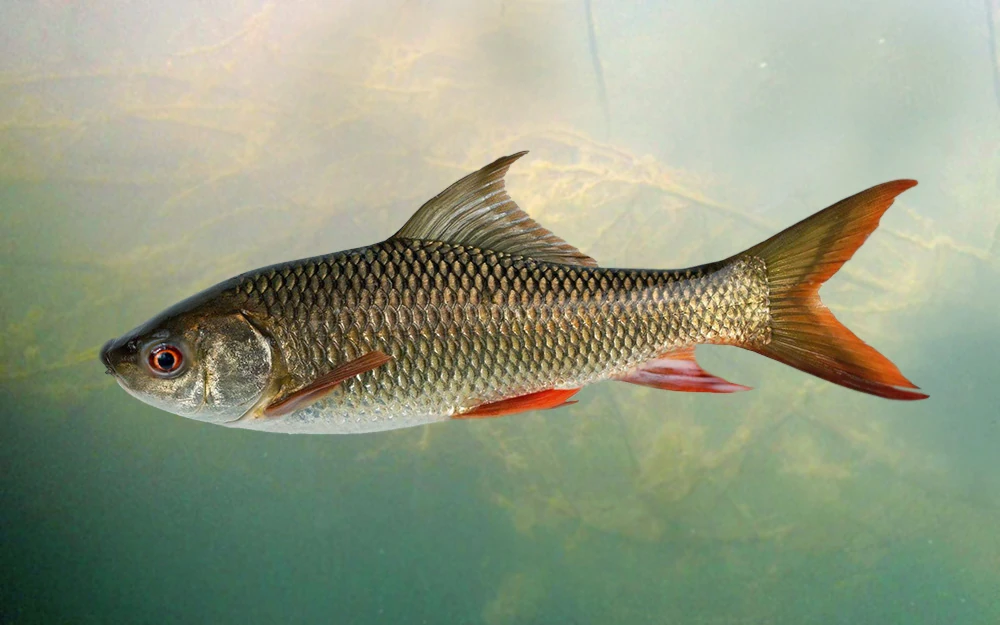
Rohu (Labeo rohita) lives in the middle water layer. Silvery, elegant, productive. This fish made Pakistani aquaculture possible. Farmers love rohu because it doesn’t fight with other species, grows quickly, and eats cheaply.
Watch a feeding frenzy sometime. Rohu swim in coordinated groups, efficient and peaceful. It’s Pakistan’s most farmed fish for good reason—it just works.
Catla: The Surface King
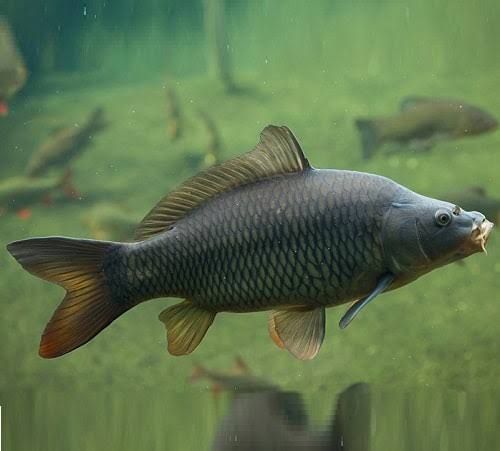
Up top, Catla (Catla catla) rules the surface. That upturned mouth? Perfect for skimming food floating on water. Catla grows bigger than rohu, sometimes impressively large. In traditional farms, it never competes for food because it’s literally eating from a different level.
Mrigal: The Bottom Dweller
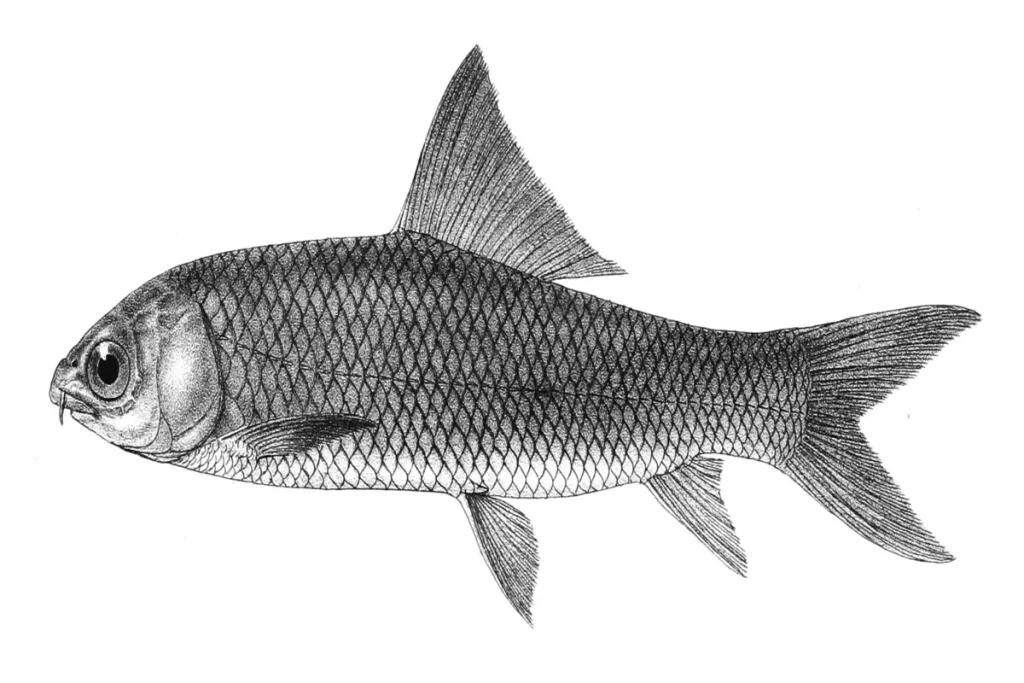
Down below, Mrigal (Cirrhina mrigala) sifts through bottom sediment. Smallest of the three but crucial. It completes the system.
Here’s the genius part: One pond. Three fish species. Zero conflict.
Catla eats from the top. Rohu from the middle. Mrigal from the bottom. Nature designed a perfect three-layer farming system, and Pakistani farmers have been using it for decades. It’s efficiency without aggression, something humans could learn from.
The Foreigners That Made Themselves Home
Not every fish swimming in Pakistani waters was born here.
Common carp (Cyprinus carpio) arrived from Europe and Asia, adapting faster than anyone expected. It’s tougher than local species, grows in conditions that would stress indigenous fish. Farmers appreciate that hardiness, even if ecologists worry about competition.
Grass carp (Ctenopharyngodon idella) earned its place through usefulness. This vegetarian giant eats aquatic weeds while simultaneously becoming food itself. Double benefit: cleaner ponds, harvestable fish. Many farmers wouldn’t operate without it now.
Rainbow trout (Salmo gairdneri) in Pakistan.
Travel to Swat’s cold streams or Gilgit-Baltistan’s mountain valleys. You’ll find trout farms that look transplanted from Colorado. These fish need cold, oxygen-rich water—exactly what our northern areas provide. It’s ecological gambling that paid off, creating premium fish farming in regions where carp would never survive.
Predators in the Rivers
Pakistan’s rivers aren’t all peaceful herbivores grazing on algae.
Wallago attu—locals call it Mullee—grows fierce and large. Its elongated body ambushes prey in murky currents. Rita rita (Khagga) and Heteropneustes fossilis (Singhi) complete the carnivore crew.
These catfish species remain wild, mostly. Farming them commercially? Nearly impossible. They eat other fish, fight, and refuse to cooperate. But ecologically, they’re vital—natural population control, keeping smaller species in check.
Where Ocean Meets Opportunity
Stand on Karachi’s fish harbor before sunrise. The smell hits first—salt, fish, diesel, human sweat. Then the noise. Boats unloading. Traders shouting prices. Ice is being shoveled.
Over 250 commercial fish species live in Pakistan’s Arabian Sea waters. That supports over one million people directly or indirectly. The math gets complicated—fishermen, boat builders, net makers, ice suppliers, truck drivers, market vendors, restaurant owners. Fish create entire economic ecosystems around themselves.
Sindh’s Fishing Heritage
Sindh’s 250-kilometer coastline buzzes with fishing activity. Communities exist entirely on tidal rhythms, when to fish, when to mend nets, when to sell catches. Traditional wooden boats called hora venture into shallow waters daily.
During shrimp season—October through March—coastal villages transform completely. Everyone works. Children sort catches. Women prepare nets. Men work rotating shifts on boats. It’s organized chaos that’s sustained families for generations.
The hand-cast nets, called thukri locally, require skills perfected over the years. Reading water. Timing the throw. Feeling the weight. It’s artisanal fishing at its finest.
Balochistan’s Unexplored Coast
Balochistan’s 800-kilometer coastline remains less developed but ecologically fascinating. Tectonic forces created underwater topography that supports coral ecosystems around Churna and Astola Islands.
These reefs harbor species found nowhere else in Pakistan. Scientists have barely studied them. Local fishermen know more through experience than researchers do through books. That traditional knowledge, passed down, tested, and refined, represents irreplaceable ecological data living in human memory.
The Fish Everyone Catches
Mullet thrives everywhere the Indus meets the sea. It handles varying salinity levels like a champion, prospers in brackish waters where most species struggle. That adaptability makes mullet incredibly abundant around the delta.
Silver whiting shows up consistently in catches. Various flounder and threadfin species contribute significantly to total landings. The FAO identified about 54 commercially important species, though traditional fishermen recognize far more based on accumulated knowledge.
Tuna fishing uses artisanal vessels with gillnets. Set them in the evening. Retrieve them the next morning. Pelagic species swim into the mesh overnight. It’s labor-intensive but produces high-quality catches with minimal environmental damage compared to industrial trawling.
Why Is the Mahseer Pakistan’s National Fish?
Every nation picks symbols that embody its character. Pakistan chose a fish that’s dying.
The Mahseer (Tor putitora) commands respect just by existing. This magnificent fish grows to impressive sizes, once thrived in northern rivers. Its selection as national fish wasn’t random—the Mahseer represents strength, resilience, and the wild beauty of Pakistan’s mountain waters.
But here’s the heartbreak: it’s critically endangered now.
Overfishing decimated populations. Habitat destruction fragmented river ecosystems. Pollution degraded water quality. Dams blocked migration routes. The pressures multiplied faster than Mahseer could adapt.
Choosing an endangered species as a national symbol may be ironic or even tragic. Maybe it reflects something deeper about Pakistani consciousness—recognition that our natural heritage requires urgent protection, not just celebration.
Conservation efforts are fighting back.
Fingerling release programs attempt to rebuild populations. Habitat restoration projects repair damaged rivers. These initiatives represent more than environmental activism—they’re about preserving a living symbol of Pakistani identity before it vanishes completely.
The Mahseer’s story mirrors every conservation challenge facing Pakistani fisheries. Overfishing everywhere. Pollution spreading. Climate unpredictability is increasing. The Mahseer stands as both warning and inspiration—what we’re losing, what we might still save.
How We Actually Catch Fish?
The Pond Culture Art
Pakistani freshwater aquaculture follows methods refined over generations through trial, error, and careful observation.
Pond culture dominates, especially for carp. Farmers use semi-intensive systems—stocking mixed species that naturally occupy different water layers. Remember that stratification? Catla up top, rohu in the middle, mrigal at the bottom.
It maximizes productivity without requiring expensive inputs or complex management. Most farmers work within tight resource constraints. They rely on natural pond productivity supplemented with modest feeding. It’s not high-tech, but it’s sustainable and profitable enough to support thousands of families.
Intensive aquaculture high stocking densities, artificial feeding, and sophisticated water management, remains rare in Pakistan. The reasons are practical: high costs, limited technical expertise, and insufficient access to affordable quality feed.
But innovation is emerging slowly. In-pond raceway systems—channels within ponds that concentrate fish and improve water circulation—could revolutionize Pakistani carp farming. Early adopters report promising results. Widespread adoption requires investment and training that most farmers can’t access yet.
From Traditional Nets to Modern Trawlers
Pakistani marine fishing encompasses remarkable diversity in techniques and technology.
At the traditional end, fishermen use methods virtually unchanged for centuries. Hand-cast nets require skill perfected through years—reading water conditions, understanding fish behavior, and timing throws perfectly. It’s artisanal fishing that’s low-impact and deeply connected to natural rhythms.
Gillnetting represents the middle ground. These nets hang perpendicular to currents or are suspended at specific depths, passively capturing fish swimming into the mesh. Properly sized gillnets selectively target specific species. Enforcement of regulations? That’s another story.
Trawling sits at the industrial end.
1958 brought mechanized trawling to Pakistan—a watershed moment. Shrimp trawlers equipped with winches revolutionized efficiency, particularly in Sindh, where commercial shrimp fisheries became major foreign exchange earners.
The New Interest: Recreation and Ornamentals
Not all fishing serves commercial purposes anymore.
Recreational fishing is gaining Pakistani popularity. Contests and events encourage participation. Mountain streams in Swat attract anglers seeking pristine environments and challenging catches. This creates economic opportunities for rural communities through tourism while fostering conservation awareness.
Ornamental fish from Pakistan’s northern waters hold export potential. Small, colorful species from clear mountain streams could generate income while encouraging habitat protection. The international aquarium trade pays premium prices for unique species. Pakistan has them but lacks the infrastructure and marketing to capitalize.
Local inhabitants also use smaller fish as live bait for catching larger game species. It demonstrates fishing’s multifaceted role—food, sport, commerce, cultural practice all woven together.
What Threatens Pakistan’s Fish Future?
The challenges facing Pakistani fisheries are sobering. But not insurmountable—that’s important to remember.
Overfishing tops every threat list. Coastal areas in Sindh and Balochistan show clear depletion signs. When fishing pressure exceeds reproduction rates, populations collapse. It’s a pattern observed globally, now evident in our waters.
Take more than the ocean can replace, and eventually you take everything.
Environmental degradation multiplies the problem. Industrial pollution. Agricultural runoff. Untreated sewage. All contaminating water bodies reduce fish survival and reproduction. Habitat loss—particularly mangrove destruction in coastal areas—eliminates critical breeding grounds for marine species.
Mangroves aren’t just trees in water. They’re nurseries for countless fish species. Shrimp breed there. Juvenile fish find protection there. Destroy mangroves, and you destroy future fish populations years before they even hatch.
Climate change introduces unpredictability that nobody fully understands yet.
Rising water temperatures affect species distributions. Fish migrate to cooler waters, leaving traditional fishing grounds depleted. Altered rainfall patterns impact river flows—too much, too little, wrong timing. Ocean acidification threatens marine ecosystems in ways we’re only beginning to comprehend.
These changes require adaptation strategies that Pakistani fisheries management has barely begun developing.
Yet challenges create opportunities too. Growing awareness drives demand for improved management. International cooperation through organizations like FAO provides technical support and frameworks. The 2018 national fisheries policy, while imperfect, represents governmental recognition that business-as-usual threatens the sector’s long-term viability.
Provincial governance structures in Sindh and Balochistan have established fisheries directorates responsible for regulatory enforcement and local management. Implementation remains inconsistent—let’s be honest about that. But frameworks exist for improvement.
The question isn’t whether we know what to do. It’s whether we’ll actually do it before irreversible damage occurs.
How Do Fish Contribute to Pakistani Nutrition and Economy?
Fish represents far more than just dinner in Pakistan—it serves as an economic pillar and a crucial source of export earnings. Yet, despite having a 1,050-kilometer coastline, the sector currently remains underperforming and contributes only 0.31% to national GDP.
This modest figure belies the human element: the industry supports over a million livelihoods both directly and indirectly. These aren’t just statistics—they are families and entire villages, particularly in Sindh and Balochistan, whose income and food security are deeply tied to the health of the fish populations. The potential for growth is vast, especially in inland aquaculture, where Pakistan has approximately 13,000 fish farms.
However, the sector faces a crisis: 60% to 90% of marine fish stocks are overexploited due to decades of unregulated fishing. Addressing this decline is critical, not just for the environment, but for the coastal communities that depend entirely on the sea
Nutritionally, fish fills critical gaps.
Rich in omega-3 fatty acids. Packed with vitamins and minerals. High-quality protein. Fish addresses malnutrition challenges in a country where food security remains pressing. Coastal and riverine communities particularly depend on fish as an affordable protein, often more accessible than meat alternatives.
Traditional medicine incorporates fish beyond dietary consumption. Various species hold places in folk remedies and therapies. This cultural integration means fish conservation isn’t merely environmental—it’s about preserving living traditions.
Seasonal consumption patterns reflect cultural depth, too. Winter months see increased seafood preference, influenced by traditional beliefs about fish’s health effects during cold weather. This seasonality creates market rhythms that fishermen have learned to anticipate and exploit economically.
The economic potential remains largely untapped.
Pakistan’s fishing industry is underdeveloped relative to its resource base. Improved investment, better management, modern processing facilities, and export market development—all could multiply the sector’s economic contribution while creating thousands of additional jobs.
We’re sitting on potential we haven’t fully realized yet.
What Does the Future Hold for Pakistani Fish?
The future isn’t predetermined. It’s being written now through choices and actions—or inaction.
Technology offers promising possibilities. Modern aquaculture techniques. Improved feed formulations. Better disease management. Genetic selection for faster-growing species. All could increase production while reducing environmental impact.
The challenge? Making these technologies accessible to smallholder farmers who dominate Pakistani aquaculture. Technology without accessibility widens inequality.
Sustainable fishing practices must replace the extraction mentality.
This requires regulatory enforcement, community buy-in, and economic incentives for conservation. Success stories exist globally—fisheries recovered from collapse through science-based management, community involvement, and political commitment.
Pakistan can learn from these examples. We don’t have to reinvent solutions that already work elsewhere.
Marine protected areas around ecologically sensitive zones like coral reefs offer one approach. Temporary fishing closures during breeding seasons give populations recovery time. Gear restrictions prevent the most destructive fishing methods.
These tools work when implemented thoughtfully and enforced consistently. That last part—consistent enforcement—remains Pakistan’s biggest challenge.
Education and awareness form the foundation.
When fishing communities understand that sustainable practices protect their long-term livelihoods, they become conservation partners rather than enforcement targets. When urban consumers demand sustainably sourced fish, market forces drive positive change.
The Mahseer fingerling release programs demonstrate what’s possible. These initiatives combine scientific expertise, government support, community participation, and public engagement. Results take years to manifest fully. But the commitment to restoring Pakistan’s national fish offers hope that broader conservation can succeed.
The Memory of Water
Here’s what stays with you: these fish are survivors.
Every rohu is swimming in a Punjab farm pond. Every tuna caught off the Balochistan coast. Every Mahseer fingerling is released into northern rivers. They represent millions of years of evolution, centuries of human-fish relationships, and potentially centuries more of coexistence.
If we choose wisely.
The waters remember everything. They remember abundance before overfishing. Clean rivers before pollution. When the Mahseer was common, not critically endangered, they remember what we’ve taken.
But water carries possibility too. Every cleaned river. Every sustainable practice is adopted. Every fish farm is managed responsibly. These become part of the water’s memory as well.
We’re writing that memory now—in choices made daily by fishermen, consumers, policymakers, ordinary citizens deciding what fish to buy at the market.
Pakistan’s fish heritage is ours to preserve or squander. The Indus sustained civilizations for millennia. It can continue feeding future generations.
If we treat its living treasures with the respect they deserve.
Ready to explore Pakistan’s natural wonders responsibly?
The landscapes where these remarkable fish species thrive are waiting. Mountain streams in the north. Coastal richness along the Arabian Sea. Pakistan’s aquatic ecosystems deserve to be experienced sustainably, protected thoughtfully, and passed on intact to children not yet born.
Let the journey begin with you. Because the fish feeding millions today deserve waters that will sustain them tomorrow—and every tomorrow after that.
FAQs
What is the most common fish in Pakistan?
Rohu dominates Pakistani aquaculture and dinner plates. Its adaptability to various conditions and compatibility in polyculture systems make it ideal for Pakistani fish farming. You’ve probably eaten it dozens of times without knowing its name.
Where is the best fish fishing in Pakistan?
For marine fishing, Sindh and Balochistan coasts offer the richest catches, especially around the Indus delta. For freshwater fishing, northern rivers in Gilgit-Baltistan and Khyber Pakhtunkhwa provide pristine environments with diverse species, including the endangered Mahseer and introduced rainbow trout.
Can you eat fish caught in Pakistani rivers?
Yes, generally. But water quality varies dramatically by location. Fish from polluted urban waterways should be avoided—they accumulate contaminants. Fish from cleaner northern rivers and properly managed fish farms provide safe, nutritious food. Use common sense about where the water comes from.
Why is the Mahseer endangered in Pakistan?
Multiple threats: overfishing, habitat destruction from development and pollution, dams blocking migration routes, and climate change affecting water temperatures. Its slow growth rate and specific habitat requirements make recovery particularly challenging. It’s not one thing killing Mahseer—it’s everything at once.
Which fish is best for health in Pakistan?
Freshwater carp species like rohu and catla, marine varieties like tuna and mullet—all offer excellent nutrition rich in omega-3 fatty acids, protein, vitamins, and minerals. Variety in consumption provides the most comprehensive benefits. Please don’t eat the same fish every day; mix it up.

Tahir is a renowned outdoor adventure specialist and wildlife tourism consultant with over 15 years of experience exploring Pakistan’s diverse hunting and fishing destinations. Based in Islamabad, he has guided expeditions across the Northern Areas, from the trout-rich streams of Gilgit-Baltistan to the high-altitude ibex hunting grounds of the Karakoram range.