Pakistan runs one of the world’s most closely watched community-based trophy hunting programs. Permit fees are among the highest anywhere on earth — a single Astore markhor permit sold for a world-record $370,000 in the 2025–26 season — yet the data on prices, quotas and seasons is scattered across provincial auction notices and news reports. This page pulls it into one place and is updated each season.
Every figure below comes from official wildlife-department auction notices and reported auction results for the 2024–25, 2025–26 and 2026–27 seasons. Trophy hunting in Pakistan is legal and tightly regulated — see our full breakdown of the laws, seasons and permits here.
Pakistan trophy hunting permits at a glance (2025–26)
These are the base (reserve) permit fees — the minimum bid to enter the auction. Markhor, ibex and blue sheep permits are sold by open auction and routinely close well above these floors; Sindh and Balochistan species are issued at set foreign-hunter rates.
| Species | Where (province / range) | Wildlife authority | Base permit fee (2025–26) | Annual quota | Season |
|---|---|---|---|---|---|
| Astore Markhor | Gilgit-Baltistan (Astore, Nanga Parbat conservancies) | GB Parks & Wildlife Dept | $200,000 (auction floor) | 4 exportable | 15 Oct – 10 Apr |
| Kashmir Markhor | Khyber Pakhtunkhwa (Chitral – Toshi-Shasha, Gahirat) | KP Wildlife Dept | Auction (recent permits $219,000–$271,000) | Very limited | Nov – mid-Apr |
| Suleiman Markhor | Balochistan (Torghar Hills) | Balochistan Wildlife / Torghar Conservation Project | Auction-based | Very limited | Nov – Apr (approx.) |
| Himalayan Ibex | Gilgit-Baltistan; KP (Kohistan, Chitral) | GB / KP Wildlife | $10,000 (GB floor) | 100 (GB) | 15 Oct – 10 Apr |
| Blue Sheep (Bharal) | Gilgit-Baltistan (Shimshal and high valleys) | GB Parks & Wildlife Dept | $30,000 (GB floor) | 14 (GB) | 15 Oct – 10 Apr |
| Sindh Ibex | Sindh (Kirthar range, Dureji) | Sindh Wildlife Dept | ~$6,000 (foreign-hunter rate) | ~15 foreign permits | Oct – Mar (approx.) |
| Urial (Sindh / Blanford) | Sindh (Kirthar range) | Sindh Wildlife Dept | ~$20,000 (foreign-hunter rate) | ~5 foreign permits | Oct – Mar (approx.) |
| Afghan Urial | Balochistan / KP | Provincial Wildlife Depts | Auction-based | Limited | Oct – Mar (approx.) |
Base fees are auction floors, not final prices. Sindh and Balochistan figures reflect the most recently published foreign-hunter rates and are revised each season. Quotas are re-set annually by each provincial department.
Markhor permits: the world’s most expensive big-game tags
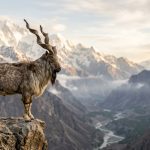
Markhor — Pakistan’s national animal — carries the highest permit fees of any species in the country, and among the highest for any game animal worldwide. Pakistan hosts several subspecies across three regions, each managed by a different wildlife authority:
- Astore markhor (Gilgit-Baltistan) — auctioned by the GB Parks & Wildlife Department. The 2025–26 base price was raised to $200,000 (from $150,000 the year before), and the top permit sold for a world-record $370,000 at the Gilgit auction. For 2026–27 the floor held at $200,000 and the top Astore markhor permit fetched $356,000.
- Kashmir markhor (KP – Chitral) — hunted in community conservancies such as Toshi-Shasha and Gahirat. KP set the previous national record at $271,000 in Chitral, and recent hunts have gone for around $219,000. This is a different subspecies from the Astore markhor of GB.
- Suleiman markhor (Balochistan – Torghar) — the smallest subspecies, tied to the pioneering Torghar Conservation Project in the Toba Kakar range.
Astore markhor permit price trend
| Season | Base (reserve) price | Top winning bid |
|---|---|---|
| 2024–25 | $150,000 | $161,000 |
| 2025–26 | $200,000 | $370,000 (world record) |
| 2026–27 | $200,000 | $356,000 |
See our full guides to markhor hunting in Pakistan and the best markhor hunting regions.
Ibex and blue sheep permits
Ibex and blue sheep make up the bulk of Pakistan’s huntable quota and are far more accessible than markhor. In Gilgit-Baltistan for 2025–26, the Himalayan ibex base fee was $10,000 (top bid $13,000) and the blue sheep base was $30,000 (top bid $40,000). For 2026–27 the GB floors were set at $11,000 for ibex and $25,000 for blue sheep. GB alone offers around 100 ibex permits a season, making it the most attainable high-altitude trophy hunt in the country. Full detail in our Himalayan ibex hunting guide.
Sindh ibex and urial (lowland hunts)
Southern Pakistan’s Kirthar range offers the Sindh ibex — the “silver ghost” of the mountains — and urial. Managed by the Sindh Wildlife Department, foreign-hunter permits in recent seasons were issued at roughly $6,000 for Sindh ibex and $20,000 for urial, with quotas in the low double digits. These hunts are less physically demanding than the northern high-altitude trophies. See our Sindh ibex hunting guide.
How permit fees are set — and where the money goes
Markhor, ibex and blue sheep permits in Gilgit-Baltistan and KP are sold by open auction: the department publishes a base (reserve) price and outfitters bid on behalf of international clients, so the final price is often far above the floor. Sindh and Balochistan generally issue permits at fixed foreign-hunter rates.
Under Pakistan’s community-based conservation model, roughly 80% of permit revenue goes directly to the local communities that steward the wildlife, with 20% going to the provincial government. Launched in Gilgit-Baltistan in 1990, the program is widely credited with turning the markhor from a poaching target into a protected community asset and pulling the species back from the brink. It is not without controversy — some outfitters warn that steep recent fee hikes are discouraging international clients — but the core conservation record remains one of Pakistan’s most cited environmental success stories.
Frequently asked questions
How much does it cost to hunt a markhor in Pakistan?
The base (reserve) fee for an Astore markhor permit in Gilgit-Baltistan is $200,000 for both the 2025–26 and 2026–27 seasons. Permits regularly sell far higher at auction — a 2025–26 Astore markhor permit set a world record at $370,000. Kashmir markhor permits in Chitral (KP) have recently sold for $219,000–$271,000. The permit is only part of the total cost; outfitter fees, logistics, guides and taxidermy are additional.
Can foreigners legally hunt in Pakistan?
Yes. International hunters can legally take part through licensed outfitters under each province’s regulated trophy hunting program, with a valid permit for a specific animal and area. Full detail is in our guide to hunting laws and permits in Pakistan.
When is the trophy hunting season?
Gilgit-Baltistan’s season runs 15 October to 10 April. Markhor is generally hunted from November to mid-April, with December — the rut — being the peak period when males are most active. Sindh’s lowland season runs roughly October to March.
How many permits are issued each year?
Quotas are deliberately small. Gilgit-Baltistan’s 2025–26 season allocated just 4 Astore markhor, 100 Himalayan ibex and 14 blue sheep permits. Markhor permits in particular are among the rarest big-game tags in the world.
Where does the permit money go?
About 80% of trophy hunting revenue is allocated to local community development and conservation, with the remaining 20% going to the provincial government.
Sources: Gilgit-Baltistan Parks & Wildlife Department and Khyber Pakhtunkhwa Wildlife Department auction notices and reported auction results, 2024–25 to 2026–27 seasons; Sindh Wildlife Department foreign-hunter permit schedules. Figures are updated each season — last reviewed for the 2026–27 auction cycle.
Planning a hunt? Pak Adventure is a licensed Pakistani outfitter (Govt. Licence DTS-GB/TO-166) arranging fully guided, permitted markhor, ibex, blue sheep and urial expeditions. Start with the legal & permit guide, or contact our team to check current permit availability for your target species and season.

Tahir is a renowned outdoor adventure specialist and wildlife tourism consultant with over 15 years of experience exploring Pakistan’s diverse hunting and fishing destinations. Based in Islamabad, he has guided expeditions across the Northern Areas, from the trout-rich streams of Gilgit-Baltistan to the high-altitude ibex hunting grounds of the Karakoram range.